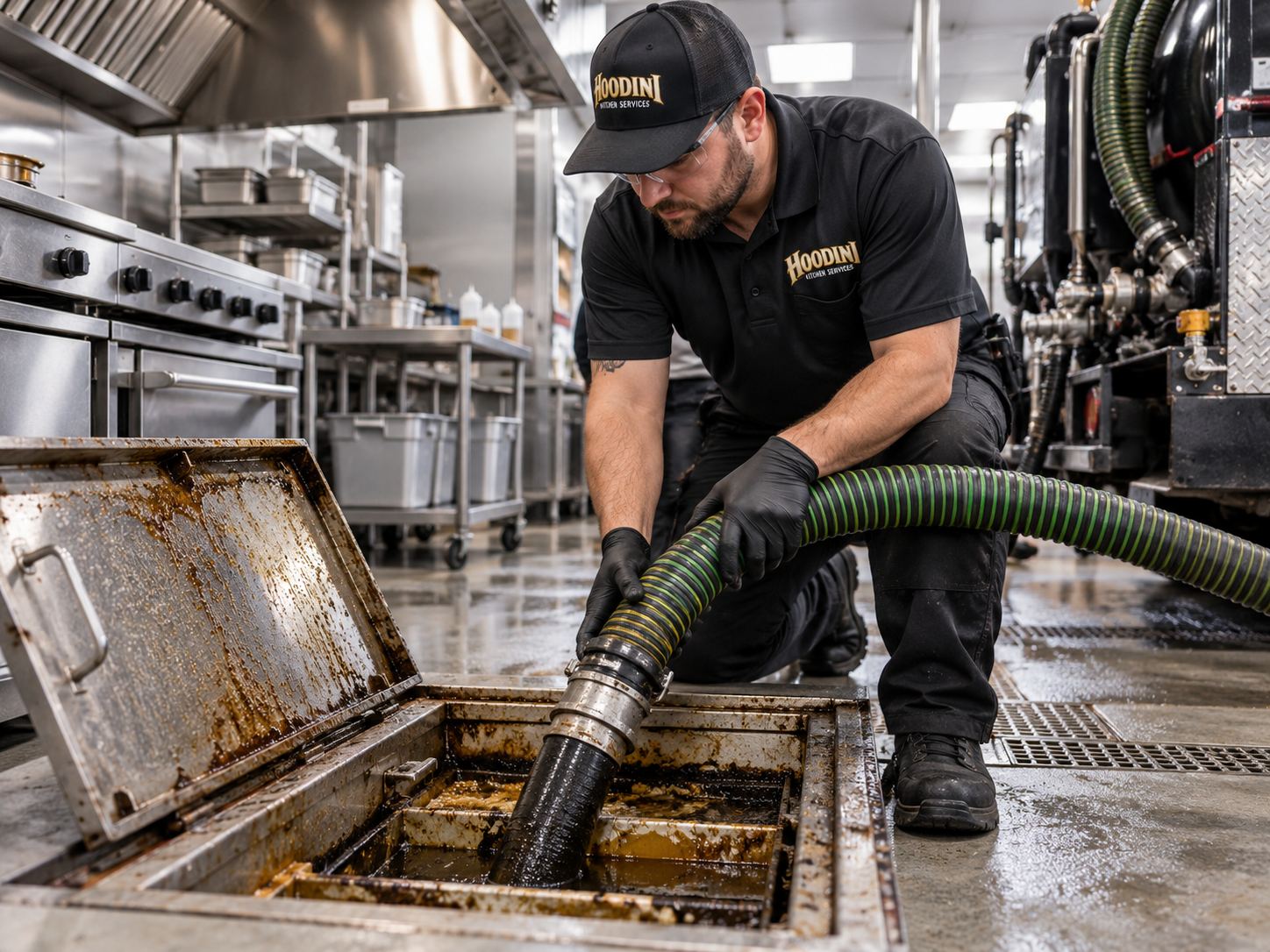
 Photo: tech pumping an indoor grease trap, lid open
A grease trap that gets skipped doesn't stay quiet. It backs up into the floor drains, it smells, and it gets you written up. We put your trap on a schedule and keep it there.
Every visit, we pump the trap fully (not just the top layer), scrape the walls and baffles, check the inlet and outlet, and haul the waste to a licensed disposal facility. You get a dated service report with before-and-after photos by email the same day.
What's included
- Complete pump-out of grease, solids, and water (not a partial skim)
- Baffles, walls, and lid scraped clean
- Inlet and outlet lines checked for buildup
- Lid reseated and area hosed down before we leave
- Waste hauled to a licensed facility, with a disposal manifest
- Dated service report and photos emailed same day
How often does a grease trap need cleaning?
Most Valley cities use the "25 percent rule": the trap has to be cleaned before grease and solids fill a quarter of its depth. For a busy kitchen with a small indoor trap, that's usually every 30 days. A larger outdoor interceptor can often go 60 to 90 days.
We'll measure your trap on the first visit and recommend a schedule. If you're not sure what your city requires, ask us. We keep the local codes on file.
| Kitchen type | Typical schedule |
|---|---|
| Fryer-heavy (burgers, wings, Mexican) | Every 30 days |
| Full-service, moderate frying | Every 30 to 60 days |
| Cafe, pizza, light grease | Every 60 to 90 days |
| Outdoor interceptor (500+ gal) | Every 90 days |
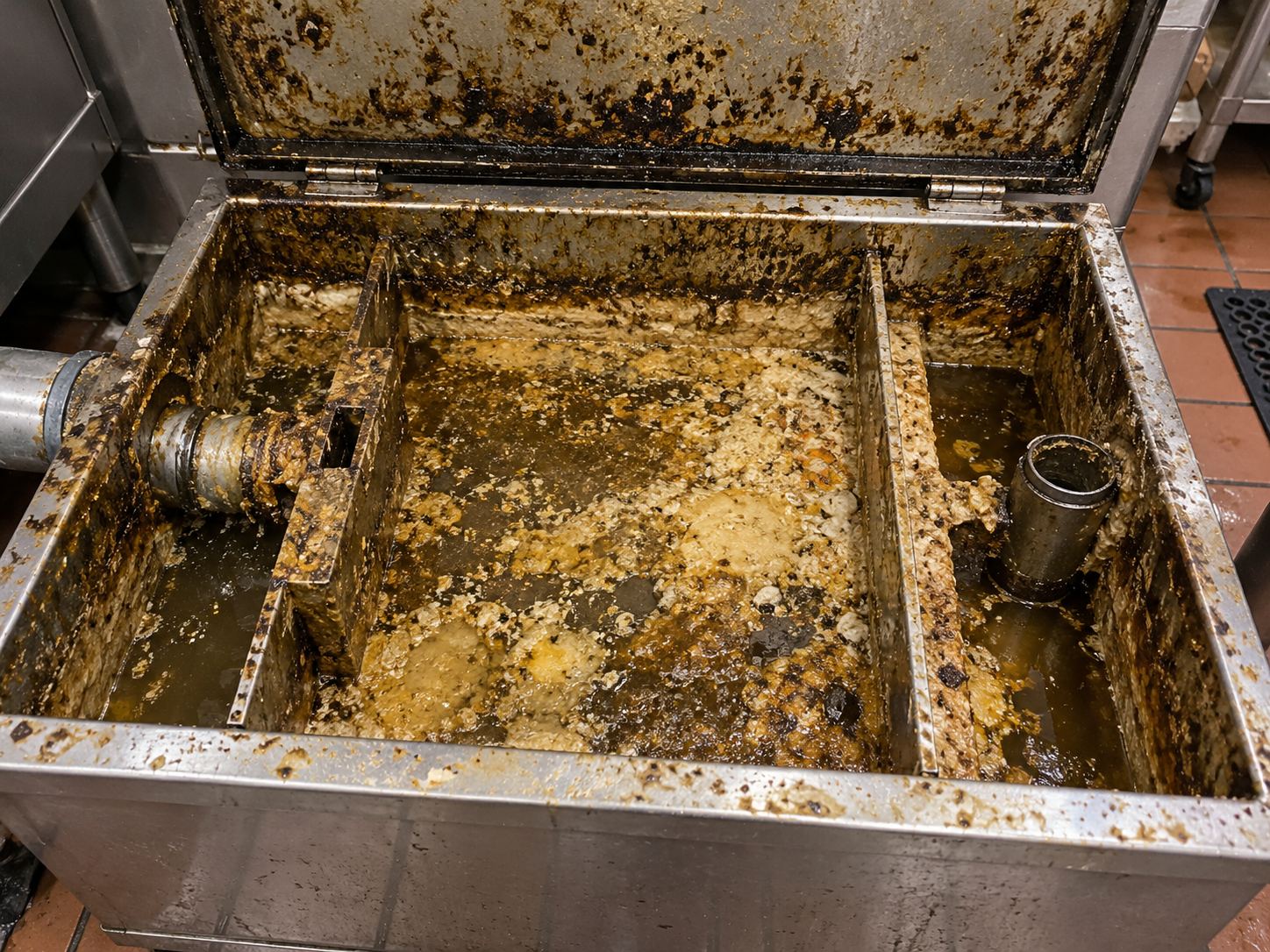 Photo: grease trap before cleaning
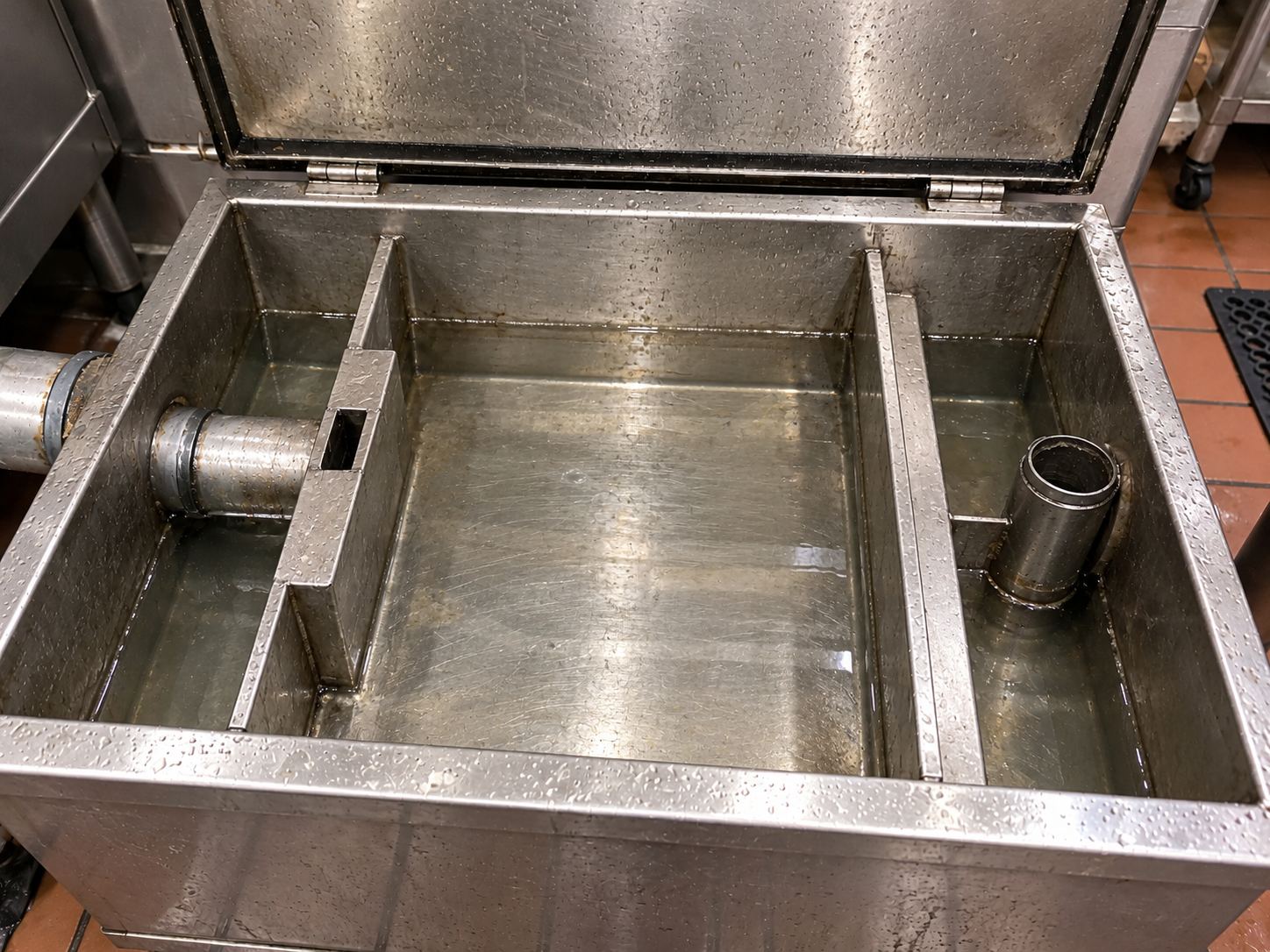 Photo: same trap after cleaning